
A wooden figurine from Baffin Island: how ancestors of the Inuit probably carved a Norseman long before Columbus, and what dates different sources give it
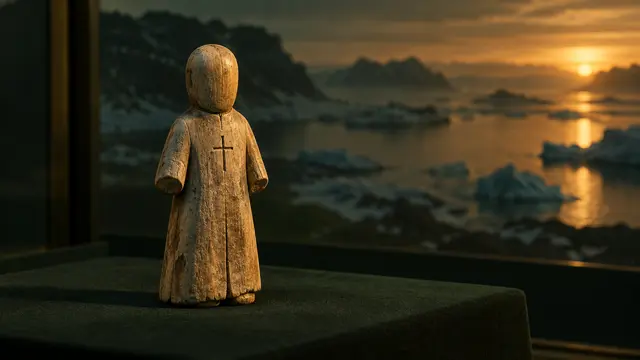
The short answer: in 1977 a wooden figurine 5.4 centimetres tall was found on Baffin Island in northern Canada. According to the museum and the 1978 paper, it was probably carved by a craftsman among the ancestors of the Inuit, people of the Thule culture, and it most likely depicts a Norseman from Greenland: the figurine wears long clothing that Live Science and the museum describe as European, and a cross on its chest. Live Science, on 12 October 2026, calls it the earliest depiction of a European made by Indigenous people anywhere in the Western Hemisphere and dates it to around 1350, that is, almost a century and a half before Columbus's voyage in 1492. The 1978 scientific paper places it in the 13th century, and the label of the Canadian Museum of History gives an age of 750 to 700 years. That the figurine depicts a Norseman specifically is stated cautiously in all three sources: "probably," "most likely."
What was found
According to Live Science, the figurine was found in 1977 in an early house built by the ancestors of the Inuit on Baffin Island, which is now part of the territory of Nunavut in Canada. It is carved from driftwood, that is, wood brought in by the sea. It is currently on display at the Canadian Museum of History.
The museum's page about the Norse in Canada names the find site: the Okivilialuk archaeological site on Baffin Island. The 1978 paper in the Canadian Journal of Archaeology specifies that the excavations took place on the south coast of the island.
Why it is thought to be a European
The museum explains this by comparison with other figurines. Wooden figurines with which the Inuit depicted their own people share common features: a round head without facial features, short arms and legs without hands or feet, a characteristic hairstyle. This figurine also has a face without features and short arms, which, according to Live Science citing the museum, is common for 14th-century carving. But the clothing is different. According to the museum, the clothing on the figurine appears European rather than Inuit, and a cross is carved on its chest. The Norse at that time were Christians and may have worn such symbols.
Live Science describes the clothing as a long robe or tunic with a cross on the front, similar to what Norse Christians from Greenland wore in the 11th to 13th centuries. The abstract of the 1978 paper says the same in more detail: the cut resembles front-slit or gored tunics and yoked hoods of the 11th to 13th centuries.
The museum calls such a depiction of a non-Inuit person unique. Live Science, citing the museum, adds that the figurine may be a reminder of a meeting between the Inuit and the Norse and is important because it was made long before sustained contact with Europeans, which began in the late 15th century. It is also the earliest evidence of how Indigenous people saw the visitors from the east: the figurine shows which features of the Norse the craftsman noticed and considered important.
Three different dates
The sources give three different answers:
| Source | Date |
|---|---|
| 1978 paper in the Canadian Journal of Archaeology, abstract | probably 13th century |
| Label at the Canadian Museum of History | 750 to 700 years ago |
| Live Science, 12.10.2026 | around 1350 |
How each date was obtained is not stated in the materials available to me: the full text of the 1978 paper is only available to members of the Canadian Archaeological Association, and the object's page in the museum catalogue does not open without a browser. So these materials do not allow me to explain where the discrepancy comes from, and I do not try to. For the reader, the conclusion is simple: the figurine is about seven centuries old, and the exact century depends on which source you trust. The claim "a century before Columbus" in the Live Science headline holds for any of the three dates, if "a century before" is read as "at least a century before."
What is known about meetings between the Norse and the ancestors of the Inuit
Around the year 1000, the Norse landed in Newfoundland and set up a camp that archaeologists call L'Anse aux Meadows. Remains of wooden buildings and of iron smelting were left there. In 2021 the journal Nature published a study that used the tree rings of wood from this site to show that the Norse were cutting trees there in 1021. The authors call this the only secure calendar date for the presence of Europeans across the Atlantic before Columbus.
The Norse sagas mention a land called Helluland, which Leif Eriksson reached in the early 11th century. According to Live Science, it is most likely Baffin Island, and the 1978 paper thinks so too.
Live Science writes that the Norse probably sailed from Greenland to what is now Canada more than once, to trade metal and cloth with the ancestors of the Inuit, the Thule people, for walrus ivory: objects of European origin have been found in early Inuit houses on Baffin Island. The museum lists such objects from Skraeling Island in Nunavut, about 800 years old: a wooden carpenter's plane, iron knives, a piece of woollen cloth, iron rivets that held together the boards of a ship. The museum notes that such objects could have reached the Inuit through a meeting with Norse traders or from an abandoned ship. Later the Norse abandoned their westward routes, according to Live Science possibly because of the resistance of the Indigenous people and the long distance.
The authors of the 1978 paper sum up cautiously: the figurine suggests contact between the Thule people of Baffin Island and the Norse from Greenland, but there is not enough evidence to discuss how significant this contact was.
How to read news about the "earliest" find
These are my suggestions, not conclusions of the sources.
- "Earliest" means earliest of those known. A new find may push the date back, and that does not make the earlier news false.
- Look at what is stated cautiously. For this figurine, "probably" appears in the scientific paper, at the museum and in Live Science. In retellings this word can disappear, and a guess starts to sound like a fact.
- Check the date against the original source. Here three sources gave three answers. If a news item has a single exact date, it is worth finding out where it came from.
- Separate the find from its interpretation. Established: the figurine is made of driftwood, was found in 1977, and has a cross carved on its chest. Interpretation: the clothing, according to the museum, appears European rather than Inuit, the figure is probably a Norseman, and the figurine may be a reminder of a meeting.
Summary
The small driftwood figurine from Baffin Island is, according to Live Science, the earliest depiction of a European made by Indigenous people of the Western Hemisphere. A European is recognised in it by the clothing and the cross on the chest, not by the face: Inuit figurines of that time, as described by the museum and Live Science, have heads without facial features. The date differs between sources, from the 13th century to around 1350, but in any case this is long before Columbus. The date 1021 from Newfoundland shows that the Norse were in North America centuries before 1492, and the figurine, according to the authors of the 1978 paper, suggests contact between the Thule people and the Norse. Norse objects in the houses of the ancestors of the Inuit, according to the museum, could have reached them both through a meeting with traders and from an abandoned ship. How significant this contact was, the authors of the 1978 paper did not judge: there was not enough evidence, in their words.
I work on AI agents and automation, and here I sometimes write about history and science. There is a separate article on how many people lived in the Americas when Columbus arrived: why estimates ranged from 1 to 112 million. If you would like to see my projects or discuss your own task, take a look at my portfolio.
Sources
- Live Science, Kristina Killgrove, 12.10.2026: Inuit figurine: A 700-year-old Indigenous carving of a European made a century before Columbus. https://www.livescience.com/archaeology/americas/inuit-figurine-a-700-year-old-indigenous-carving-of-a-european-made-a-century-before-columbus
- Canadian Museum of History: History Hall Article, The Norse. https://www.historymuseum.ca/digital-on-demand/history-hall-article-the-norse
- Canadian Journal of Archaeology, 1978: A Possible Thule Carving of a Viking from Baffin Island, N.W.T. (abstract). https://canadianarchaeology.com/node/9824
- Margot Kuitems et al.: Evidence for European presence in the Americas in AD 1021. Nature, 2021. https://www.nature.com/articles/s41586-021-03972-8