
Dream Labs launches Dream API for robots and raises $90M: what the company claims, and what to check before buying
Topics: Robots, AI, Industry, Small business
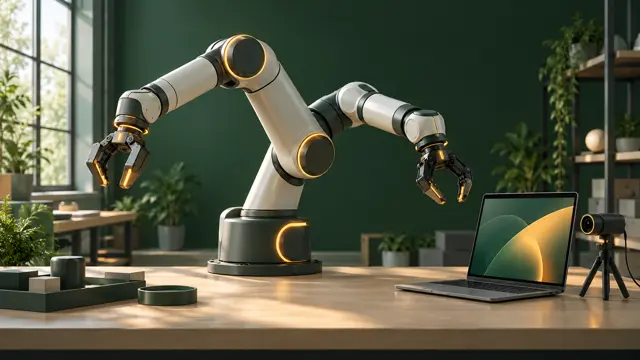
Short answer: on October 22, 2026, The Robot Report reported that startup Dream Labs raised a $90 million seed round and launched Dream API. According to the company, this is an interface that turns a robot's camera feed and a plain-language command into motor commands, including for robots the model has never seen before. Everything below about how it works and how well comes from the company itself, its investor, and one partner customer: there's no independent verification in the source. Below I go through what exactly was announced, how it differs from ordinary task-specific robot programming, and what to ask if you're considering such a tool for your own robots.
What happened
Dream Labs, a San Francisco startup, announced a $90 million seed round. The round was led by B Capital and Kindred Ventures, with participation from A.Capital, Unusual Ventures, SV Angel, Wing VC, Scribble VC, and entrepreneur Adrian Aoun.
Alongside the round, the company announced Dream API: a publicly available programming interface. According to Dream Labs, it takes two inputs: video from a robot's camera and a plain-language instruction, and outputs motor commands meant to carry out that instruction. The company's key claim: the API works even on robots the model has never seen before.
Developers and robotics hobbyists can start using the product today: sign up, connect any gripper-equipped robot, and, according to the company, the robot will start performing the task. Dream Labs runs its models in data centers worldwide, so, the company says, response is fast no matter where the robot is located.
How this differs from ordinary robot programming, according to the company
Dream Labs frames its idea around a problem it sees in the industry: a record 5 million industrial robots are in operation worldwide, and, according to the company, almost every one of them is programmed for a single task, and most can't transfer a learned skill to another machine. Inexpensive robots now sell for a few thousand dollars but ship without built-in intelligence, and training one robot on one task can take specialists months. A new task or new hardware, the company says, often means training has to start over.
The company's flagship model, Dream-1, is claimed to work across robots from different manufacturers. It was trained on video of people doing everyday chores, and, according to Dream Labs, the model predicts what happens next and determines the robot's resulting action. Because it learns from videos of people rather than one specific machine, the company claims its capabilities transfer across different hardware. Dream Labs calls this zero-shot learning: the model controls a new gripper-equipped robot "out of the box," with no extra tuning for that specific robot.
Dream Labs co-founder and CEO Joel Jang describes the idea through an analogy: "When you get into a rental car, you don't relearn how to drive. You find the controls, and then your past driving experience takes over." He says Dream-1 approaches a new robot the same way, so a new robot can start doing useful work in minutes rather than months. He separately stresses that instead of edited demos, the company is giving people a working model they can test for themselves, "warts and all."
What else is part of the product
Besides the API itself, Dream Labs offers fine-tuning as a service: for unsupported hardware or new tasks, developers and robot manufacturers can send a small set of demonstration data and get back a model tuned to their robot within a few hours, according to the company.
Another part of the product is the so-called robot playground. Anyone with a browser can type a command to a robot physically sitting in Dream Labs' San Francisco office and watch its reaction live, with no editing and no need to buy a robot of their own.
According to the company, it currently supports robots priced roughly between $2,000 and $10,000, and Dream-1 needs no extra data to control a dual-arm robot with parallel grippers. Dream Labs has more than 20 hardware partners for whom the model is individually fine-tuned. Right now, Dream-1, per the company's claim, handles tabletop tasks: picking up and placing objects, folding laundry. Support for wheeled mobile platforms and multi-fingered robotic hands is said to be coming, with no stated date.
The company plans to spend the new $90 million primarily on compute: expanding the set of tasks and robots Dream-1 works with, and scaling to more users.
Who backs up these claims
The Robot Report quotes three parties, and all three have a stake in Dream Labs' success:
- The company itself, through its claims about Dream-1 and Dream API's capabilities.
- An investor. Daisy Tsai, General Partner at B Capital, says: "A capable robotic arm has gone from the price of a luxury car to the price of a top-tier laptop. Now it needs intelligence," adding that the Dream Labs team did "defining work in robot learning" at NVIDIA, and now, in her words, "anyone with an API key can build on this."
- A partner customer. Ryan Chan, co-founder and CEO of MakerMods (which sells dual-arm robotic manipulators for $2,000), says that with Dream-1 his robot "was working within minutes and attempting tasks we never programmed."
The source contains no independent tests, no comparison with other robot-learning systems, and no third-party lab data: this is an investment-round announcement, and all three parties quoted have a stake in Dream Labs' success. Before relying on these figures and descriptions in your own decision, you should separate them from verified fact.
What to ask if you're considering such a tool for your own robots
- Which exact robots and tasks the demos show. The claim "works on gripper-equipped robots it has never seen" sounds broad, but it's limited to robots with grippers; your hardware and your tasks may have nothing in common with what's shown in the demos.
- Who does it: your technical specialist.
- How to verify: ask to see it run on your exact robot model and your exact task before paying for fine-tuning or integration.
- What happens when it makes a mistake. The founder himself says the company is handing people a working model "warts and all," meaning errors are an expected part of how it works, not an exception.
- Who does it: you, during contract negotiations.
- How to verify: get it in writing who is liable for the result of a robot's erroneous action (the company, the integrator, or you), and what happens to unfinished or damaged work.
- How much fine-tuning for non-standard hardware costs. The source only says a tuned model can be delivered "within a few hours" after you send data, but doesn't say how much this costs or how much demonstration data you need to collect.
- Who does it: you, when requesting a quote.
- How to verify: get a number in money and in hours of your people's time spent collecting demonstrations, before comparing it to training a robot the usual way.
- What exactly is written into the contract about data from your camera. The company says its models run in data centers worldwide; the source doesn't say whose data centers these are, exactly what is sent there from your camera, or whether it's recorded anywhere.
- Who does it: your lawyer or data security officer, before signing the contract.
- How to verify: make sure the contract with Dream Labs spells out five things separately: exactly what camera data is sent to the external system, who besides Dream Labs gets access to it (contractors, cloud provider, third parties), how long the data is kept, how and when the company deletes it, and whether the company is allowed to use it to improve its models, and if so, for how long that right lasts, since it can outlast the data's own retention period. If your lawyer can't find an answer to each of these five points in the contract text itself, the question stays open, and you should hold off on using the camera.
- Whether switching to Dream API pays off for your company specifically within the first year. The company promises "minutes instead of months" for a single task, but that comparison comes from its own materials and doesn't include your costs for rollout, support, and possible failures.
- Who does it: you or your technical lead, with an accountant for the final figures.
- How to verify: Dream API changes how the robot is controlled. For every new rollout (a new task, a new object, or a new work site), go through this sequence from the start. First, commission a joint risk assessment from your in-house occupational safety specialist and your technical specialist who knows this robot model: based on the robot's operating documentation, and accounting for this specific task, this specific object, and this specific location. Second, based on that assessment, both specialists put in writing the boundaries of the danger zone for this case and the list of required protective devices (guards, sensors, the emergency stop button), and they give written approval for the trial run itself before it starts. Third, before every single run without exception, check: the danger zone is clear of people, every protective device on that list is switched on and working, and someone is standing by ready to stop the robot immediately. Fourth, first run the robot under Dream API on a test object, with no people and no valuable cargo present. Fifth, before moving to the real work task, the same specialists redo the risk assessment and determine the danger zone and all protective measures specifically for that task (including protective devices), accounting for the people who normally work or pass by that spot during working hours, confirm in writing that all these measures are in place on site, and only then issue written approval to proceed. Ask Dream Labs for a free or low-cost trial period on your actual equipment. Run the trial on the same volume of tasks the robot currently handles in a month, and record a measurable result: the share of successful attempts and the number of errors. Based on that, draw up a one-year cost plan for both approaches at that same task volume. For Dream API: the cost of using the API, one-time setup and fine-tuning, your people's time spent on support, fixing the robot's mistakes, possible production downtime from failures, and the cost of work damaged by errors. For your current approach over that same year: the salary of the engineer who programs the robots, maintenance of programs already running, and the same possible downtime and error consequences, if they happen under that approach too. Switch to Dream API only if the success rate measured in the trial is no lower than what your current approach delivers, and the full one-year estimate for Dream API is lower than the full one-year estimate for your current approach; if the trial fails or the estimate comes out higher, switching doesn't pay off within a year.
What this news does not support
- That Dream-1 has been independently verified. The source contains no party without a stake in the company's success: it's the company itself, its investor, and a partner customer.
- That the API works equally well with all robots. Support is claimed for gripper-equipped robots priced from $2,000 to $10,000, with fine-tuning for more than 20 partners; the source says nothing about other hardware.
- That wheeled robots and multi-fingered robotic hands are already supported. The source calls this a future plan ("to follow"), with no date.
- A specific price for using Dream API. The source gives only the investment round figures and a rough price range for supported robots, not the service's own cost or pricing model.
Bottom line
On October 22, 2026, The Robot Report reported that startup Dream Labs raised a $90 million seed round and launched Dream API: an interface that, according to the company, turns video from a robot's camera and a text command into motion, including for unfamiliar models of gripper-equipped robots. All of this currently rests on the word of the company itself, its investor, and one partner customer, with no independent verification. If you're considering such a tool for your own production, the main thing is not to confuse the broad claim "works with any gripper-equipped robot" with verification on your own hardware and your own task. And to pin down in advance, in the contract with Dream Labs, who is liable for the robot's mistakes and exactly what leaves your camera for an external system.
I work on AI agents and automation. If you would like to see my projects or discuss your own task, take a look at my portfolio.
Sources
- The Robot Report, October 22, 2026: Dream Labs raises $90M and launches Dream API. https://www.therobotreport.com/dream-labs-raises-90m-and-launches-dream-api/