
Laplace Intelligence tests robots and self-driving cars with an artificial adversary in simulation: what is claimed and what to ask a supplier
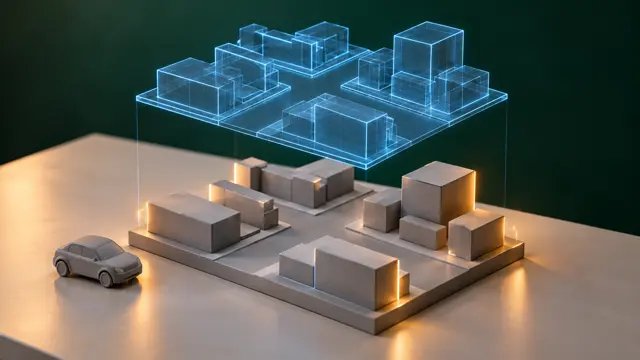
Short answer: the startup Laplace Intelligence from Ann Arbor, according to TechCrunch on 13 October 2026, was due to present at the TechCrunch Disrupt conference the same day a way of testing robots and self-driving vehicles before they reach the real world. The idea is that they are tested not by a person with a list of scenarios but by an AI agent: it looks for weak spots in a simulation built from real maps and invents rare, difficult situations itself. All that is known about the quality of the method is the founder's words and the description of a demonstration. Below is what is claimed, what the article does not say, and what questions to ask if you are buying a robot or an autonomous vehicle.
What is claimed
There is one source: Rebecca Bellan's article in TechCrunch dated 13 October 2026. This is a retelling; I did not read the company's own page.
- What the company does. Laplace is building automated "red teaming" for robotics and physical AI. This means that a system is tested by deliberately trying to make it fail. The company's bet is that the safety of physical AI can be verified only by having another AI test it.
- Whose company it is. It was founded a year ago by people from the University of Michigan: chief executive Howie Sun and chief scientist Henry Liu. According to the text, in 2023 they published a paper on this subject that made it onto the cover of the journal Nature.
- How the simulation is built. According to Sun, it is a refined version of Nvidia's Cosmos platform, which simulates the world. The environment is built from real-world data: a Google Street View image can serve as a reference from which a whole street is generated, but with real maps at true scale. A developer changes the setting in words in real time, for example adding daytime traffic. Traffic data, according to Sun, comes from navigation providers such as TomTom.
- What distinguishes the method. Not only the environment is simulated but also the behaviour of other participants. In a demonstration Sun made the tested vehicle swerve into oncoming traffic, and the oncoming car yielded instead of colliding or driving straight through, as happens with some generative world models.
- The main thing, according to the company. AI agents invent rare, difficult cases themselves. According to Sun, they can compile them from news, police reports on accidents and other information. At present, the author writes, developers more often train AI on edge cases using recorded footage turned into simulation, or rely on people who come up with and describe scenarios.
- Money and customers. The company, according to the text, already earns revenue and has shown a modest profit. More money comes from autonomous driving use cases, with customers including the Japanese truck maker Isuzu and the Texas company Bot Auto, which works on autonomous trucks. According to Sun, Nvidia is also a customer. Together with Nvidia and T-Mobile the company is running a free pilot for a smart city in San Jose, for traffic operations, as the author describes it. Work has also begun with partners who build humanoid robots for warehouses.
- What next. Most contracts are currently one-off, and the company wants to move to recurring payments. The nearest goal is to raise money. The author names Applied Intuition as the chief rival, which, according to the text, has raised 1.2 billion dollars at a valuation of 15 billion.
What is not stated
The article has no data on how often the method finds real errors, how what is found in simulation is compared with what happens on the road, and who has independently checked the results. There is also no information on what errors were found at customers. The author quotes Sun's words about a "new paradigm": that is the founder's opinion.
What this means for a company that buys such systems
These are my conclusions and suggestions, not data from the article. If your supplier says its robot or vehicle has been "tested in simulation", that fact says little in itself: what matters is exactly what it was tested with.
- How the simulation is built. What data is taken from the real world and what is invented.
- Who does it: you together with a technically trained employee or consultant.
- How to check: ask for a written description of the sources of maps and data, and show it to a person who knows your site. If the description does not match your warehouse, workshop or road, the simulation is not suitable for you.
- Who invents the difficult cases. A person, recordings or another AI.
- How to check: ask for a list of ten difficult situations that you consider the most dangerous on your site, and ask how the supplier tested each one.
- What errors have already been found. This is the most visible evidence.
- How to check: ask for a report of the errors found, with date, description and how they were fixed.
- Whether there is testing outside simulation. According to the article, the company itself says that over time it wants to build evidence that customers, insurers and regulators can trust.
- How to check: ask what tests outside simulation the supplier has run and who ran them independently, and ask for the report.
What your part of the checking costs
The calculation uses conditional numbers; substitute your own. Suppose reading the description and compiling the list of ten situations takes a technical employee 6 hours at 2000 roubles, two hours of a manager at 3000 roubles go on reports, and reviewing the supplier's reports takes 8 hours of two employees at 1500 roubles. That is 6 × 2000 + 2 × 3000 + 8 × 2 × 1500 = 12,000 + 6,000 + 24,000 = 42,000 roubles, and this is only the conditional cost of your employees' time: the price of the supplier's services, preparing the site and safety measures is not included. Compare this with the cost of an accident or downtime if the system makes a mistake on your site. If you cannot name that cost, estimate it before buying.
When this does not concern you
If you do not buy robots and autonomous vehicles and do not plan to, the announcement does not directly affect you. If you are choosing an ordinary office program, the questions above are unnecessary.
Summary
According to TechCrunch on 13 October 2026, Laplace Intelligence presents testing of robots and self-driving cars by an AI agent in a simulation built from real maps. Customers, according to the founder, already exist, but the article contains no independent data on the quality of the method. A buyer should ask how the simulation is built, who invents the difficult cases, what errors have already been found and what independent tests outside simulation have been run.
See also another article in this section: how to check that a robot is safe near people.
I work on AI agents and automation. If you want to look at my projects or discuss your task, visit my portfolio.
Sources
- TechCrunch, Rebecca Bellan, 13.10.2026: Laplace Intelligence red-teams robots and self-driving cars before they hit the real world. https://techcrunch.com/2026/10/13/laplace-intelligence-red-teams-robots-and-self-driving-cars-before-they-hit-the-real-world/