Warp Sciences announces a $215M round for robots that search for drugs: what was announced and what still lacks evidence

Short answer: Kevin Weil, whom TechCrunch calls OpenAI's former science lead, has launched a startup called Warp Sciences. The company's goal: train robots to synthesize and test molecules for drug discovery, so they can take over part of the labor-intensive lab work. That is a stated goal at launch, not a description of a system that already works. According to Weil himself, who announced it on the social network X, the company raised $215 million at an $865 million valuation. Below I go through the TechCrunch article to separate what is fact, what is the founder's claim without independent verification, and what questions to ask any vendor of similar automation before putting money into it.
Where this comes from
Source: TechCrunch, "Former OpenAI science lead launches Warp Science to automate wet labs with robots," by Marina Temkin, published October 22, 2026.
Who this is and how much money was raised
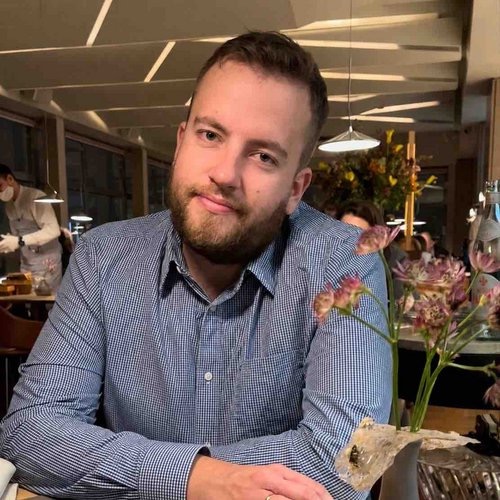
Kevin Weil, whom the article calls OpenAI's former science lead (his exact title and the dates he worked there are not disclosed in the piece), launched the startup. Curiously, the company's name is inconsistent within the TechCrunch text itself: the headline uses the singular "Warp Science," while the body uses the plural "Warp Sciences" twice. I use the name as it appears in the body of the article.
According to Weil, who announced the news on X, the company closed a round of $215 million at an $865 million valuation. The source states directly that these figures come from the founder himself and were announced on social media, not independently confirmed in the article's text. The round was led by Lightspeed, with participation from IVP, Mayfield, Lux Capital, Premji Invest, and Menlo Ventures.
What the robots are supposed to do
As TechCrunch describes it, the company's goal is to automate "wet-lab" work (laboratory operations with liquid reagents and samples, not work with data on a computer) and thereby speed up drug discovery with robots that can operate around the clock. This is TechCrunch's paraphrase of the company's stated goal, not a description of an already working, proven system.
How the robots are supposed to be trained: human chemists in the lab will wear cameras and sensor-equipped gloves and use that to show robots how to perform various lab tasks. The article does not call this "teleoperation" or "learning from demonstration," and it does not use any technical term for the method at all. So I am not guessing a method name on the source's behalf either: it says exactly what it says, in future tense ("will train"), without specific tasks, timelines, or training results.
Why this matters to the company, in the founder's own framing
TechCrunch describes the context this way: biotech companies have long outsourced the labor-intensive synthesis of thousands of molecule variations to contractors, including in China, naming WuXi AppTec as an example of such a contractor in the industry. An important caveat: WuXi AppTec is mentioned in the article specifically as an example of an existing industry contractor, not as a client or partner of Warp Sciences, and the article does not name any of Warp Sciences's own clients at all.
As the source paraphrases it, Weil wants to bring that work back onshore and insulate the entire drug development process from geopolitical supply-chain risks. There are no direct quotes from Weil in the article; his position is conveyed only through paraphrase and a reference to his post on X.
What is established here, and what remains the founder's claim
This is my own breakdown of the article.
- A fact the source presents as confirmed. The launch of the company itself, and that Kevin Weil founded it.
- Claimed by the founder via social media, without independent verification in the article. The round size ($215 million) and the company valuation ($865 million).
- Reported by TechCrunch as fact, but without stating the source of this information within the article itself. The list of investors: Lightspeed as the round's lead, with IVP, Mayfield, Lux Capital, Premji Invest, and Menlo Ventures as participants. The article does not say this list also comes from Weil's post on X.
- The company's stated goal, as paraphrased by the source, not a proven result. That the robots will "speed up" drug discovery and can operate around the clock: this is a declaration of intent at launch, not a description of a system already working in production.
- Not disclosed by the source at all. The names of any clients or lab partners, a date when the robots will begin real work, any independent assessment of the technology by outside experts, or details of the training method. By comparison, in other physical-AI write-ups (for example, about the startup Eka Robotics) TechCrunch additionally cited assessments from independent specialists. There is no such assessment at all in the Warp Sciences piece.
What a business leader considering similar automation should take from this
These are my own conclusions, not advice drawn from the source material.
- A loud funding announcement is not the same as proven technology. Before relying on any similar announcement, look for more than just the amount and the valuation: an independent assessment of the result, meaning who, besides the company itself and its investors, has seen the technology work and what exactly they said.
- Verify funding figures that come from the founder on social media separately. If a decision (for example, about a partnership or investment) depends on the size of the round or the company's valuation, request a document from the company itself, or confirmation from an independent outlet, rather than relying on a post on X as relayed by a third party.
- A lack of named clients is a signal, not a minor detail. If any vendor of such technology, not only Warp Sciences, does not name a single client or partner at the announcement stage, ask them directly who exactly they are working with and on what tasks. A demonstration on someone else's similar task only shows how the technology behaves for that other party, not the result on your own task. So verify the result on your own task this way: before any trial run, pick two or three measurable indicators yourself (for example, time per operation and the defect or error rate) and record their current value under manual work; then run a small trial using your own data, not the vendor's demo data; compare the before-and-after values on exactly those numbers. If a vendor refuses a trial run on your own data or will not let you compare before-and-after figures, that is reason enough not to commit money or timelines to the technology until such verification becomes possible.
Bottom line
Warp Sciences launched with the goal of training robots to synthesize and test molecules in drug discovery so they can take over part of the manual lab work. According to founder Kevin Weil, the company raised $215 million at an $865 million valuation, with TechCrunch naming Lightspeed as the round's lead. At the same time, the round size and valuation, coming from the founder, are not independently confirmed in the article, the source does not name clients or a launch timeline, and there is no independent assessment of the technology by outside experts at all, unlike similar news about other physical-AI startups.
See also a write-up on another physical-AI funding round.
I work on AI agents and automation. If you'd like to see my projects or discuss your own task, check out my portfolio.
Sources
- TechCrunch, October 22, 2026, Marina Temkin: Former OpenAI science lead launches Warp Science to automate wet labs with robots. https://techcrunch.com/2026/10/22/former-openai-science-lead-launches-warp-science-to-automate-wet-labs-with-robots/